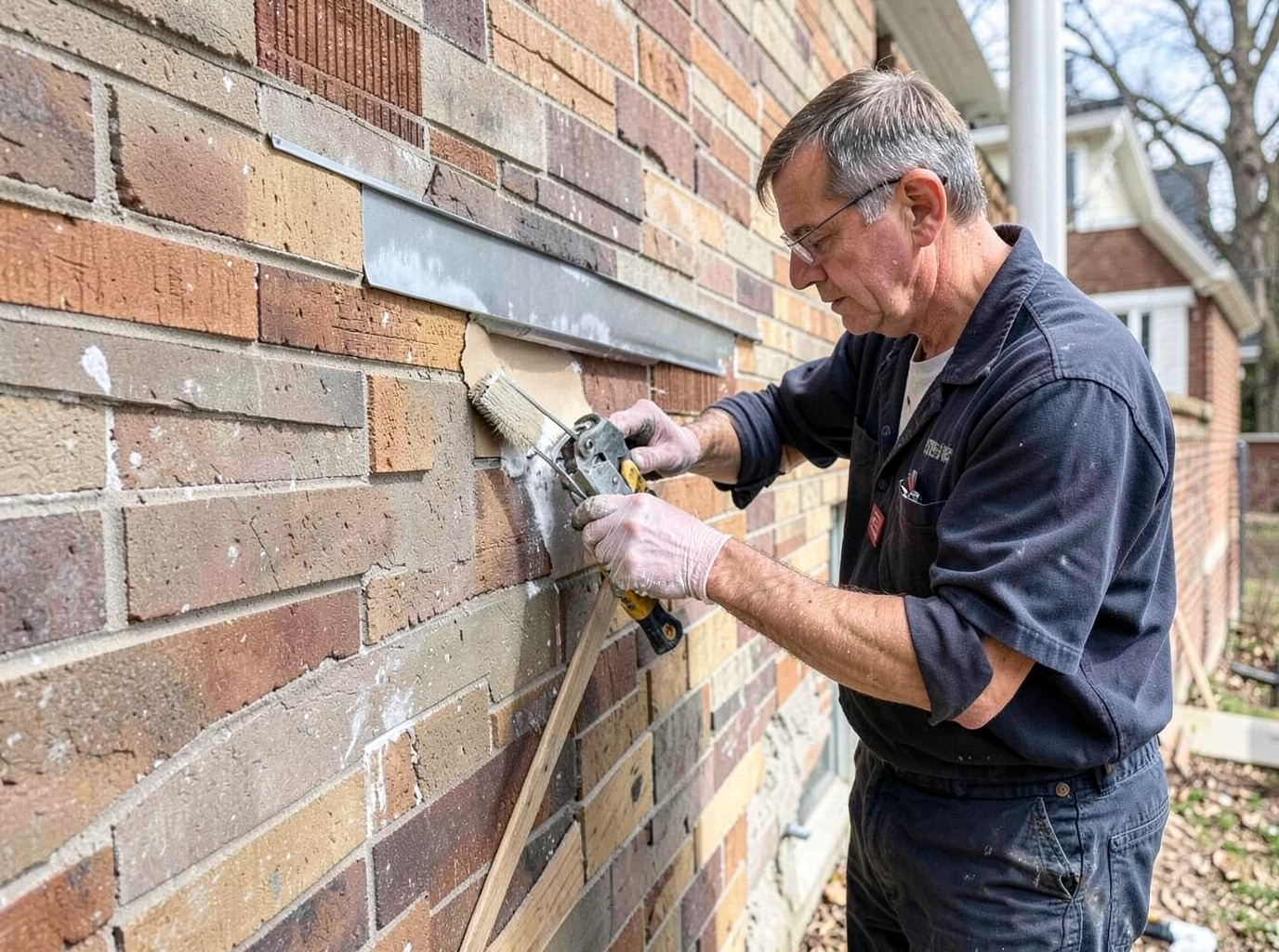
Kenosha's humid continental climate brings repeated freeze-thaw cycles that expand and contract metal flashing where chimneys meet asphalt or slate roofs. Homes in neighborhoods such as Allendale and Roosevelt often have original brick chimneys from the early to mid-20th century that were flashed with lead or copper now showing corrosion at the step seams. Proper repair requires removing deteriorated flashing without disturbing the chimney crown or mortar joints that already face road-salt exposure from nearby Bradford Beach winter winds.
Counter flashing must be cut into the chimney mortar at least three-quarters of an inch and secured with lead wedges before new step flashing is woven under the shingles. In Uptown and Bain Park, many two-story homes have limited roof access that forces technicians to work from ladders rather than scaffolding, increasing the time needed to match existing shingle courses around the chimney. Using mismatched galvanized steel instead of copper or stainless creates galvanic reaction with older lead flashing still present on many Kenosha County roofs.
Water intrusion around chimneys frequently travels down interior walls before homeowners notice ceiling stains, especially after heavy summer thunderstorms that follow the lake-effect pattern from Lake Michigan. Technicians check for rotted sheathing by probing from the attic side and replace any compromised decking before reinstalling flashing. Skipping this step leaves hidden rot that later requires full roof sections to be opened in Racine or Milwaukee commuters' homes.
Kenosha building practices expect flashing to extend at least six inches up the chimney and four inches under the shingles on all sides. Technicians also verify that the cricket or saddle behind wide chimneys on Lincoln Park homes still sheds water correctly, because a failed cricket funnels meltwater directly into the flashing joint during spring thaw.
Technician insight
In Kenosha the thing that catches most people out with Chimney Flashing Repair is the way lake-effect snow and road salt accelerate corrosion on the north side of chimneys in HarborSide and Bain Park. Homeowners often notice interior stains only after the second or third winter, by which time the step flashing has already lifted several courses of shingles.
Chimney Leak After Spring Thaw
A homeowner in the Roosevelt neighborhood reported water stains on a second-floor ceiling after March melt. Inspection showed failed lead step flashing on the north side of a 1940s brick chimney where repeated freeze-thaw had opened seams. Technicians replaced the step and counter flashing with copper, resealed the mortar joints, and confirmed no sheathing rot from the attic. The leak stopped and no further interior damage occurred.
Chimney Flashing Repair Services We Offer
✓Step Flashing Replacement
Remove corroded step pieces and weave new copper or stainless flashing under existing shingles to restore a watertight seal around the chimney base.
✓Counter Flashing Installation
Cut new counter flashing into chimney mortar joints and secure it over step flashing to block wind-driven rain common along the Kenosha lakefront.
✓Chimney Cricket Repair
Rebuild or reflash the saddle behind wide chimneys so meltwater and summer downpours divert away from the flashing line on steep Uptown roofs.
✓Lead Flashing Restoration
Clean and re-secure original lead flashing on historic homes in Downtown Kenosha and HarborSide rather than full replacement when the material remains sound.
✓Leak Tracing and Sealing
Use moisture meters and attic inspection to locate hidden chimney leaks before applying targeted sealant or new flashing sections.
Chimney Flashing Repair Cost in Kenosha, WI
| Service | Typical Range | What Affects It |
|---|---|---|
| Standard Chimney Flashing Repair | $450–$850 | Single-story homes with easy ladder access |
| Two-Story Or Steep Roof Repair | $750–$1,400 | Uptown and Lincoln Park homes requiring extra safety measures |
| Cricket Rebuild And Flashing | $900–$1,600 | Wide chimneys on older Roosevelt or Allendale houses |
| Rotted Decking Replacement | $250–$600 | Added when moisture has damaged sheathing under flashing |
Ranges are typical for Kenosha, WI and confirmed with an exact written quote before any work starts.
How it works
- 1
On-Site Assessment
Inspect the chimney, roof deck, and attic from both exterior and interior to identify flashing failure points and any rotted sheathing.
- 2
Material Matching
Select copper, stainless, or lead flashing that matches the existing roof and chimney construction found on the specific Kenosha home.
- 3
Old Flashing Removal
Carefully extract deteriorated flashing without damaging shingles or mortar, then probe decking for hidden rot.
- 4
New Flashing Installation
Install step and counter flashing with proper overlaps, wedges, and sealant suited to Kenosha's freeze-thaw cycles.
- 5
Final Water Test
Run water over the repaired area and check the attic to confirm no active leaks remain before cleanup.
Pricing
Cost depends on chimney height, access difficulty, and whether rotted decking must be replaced.