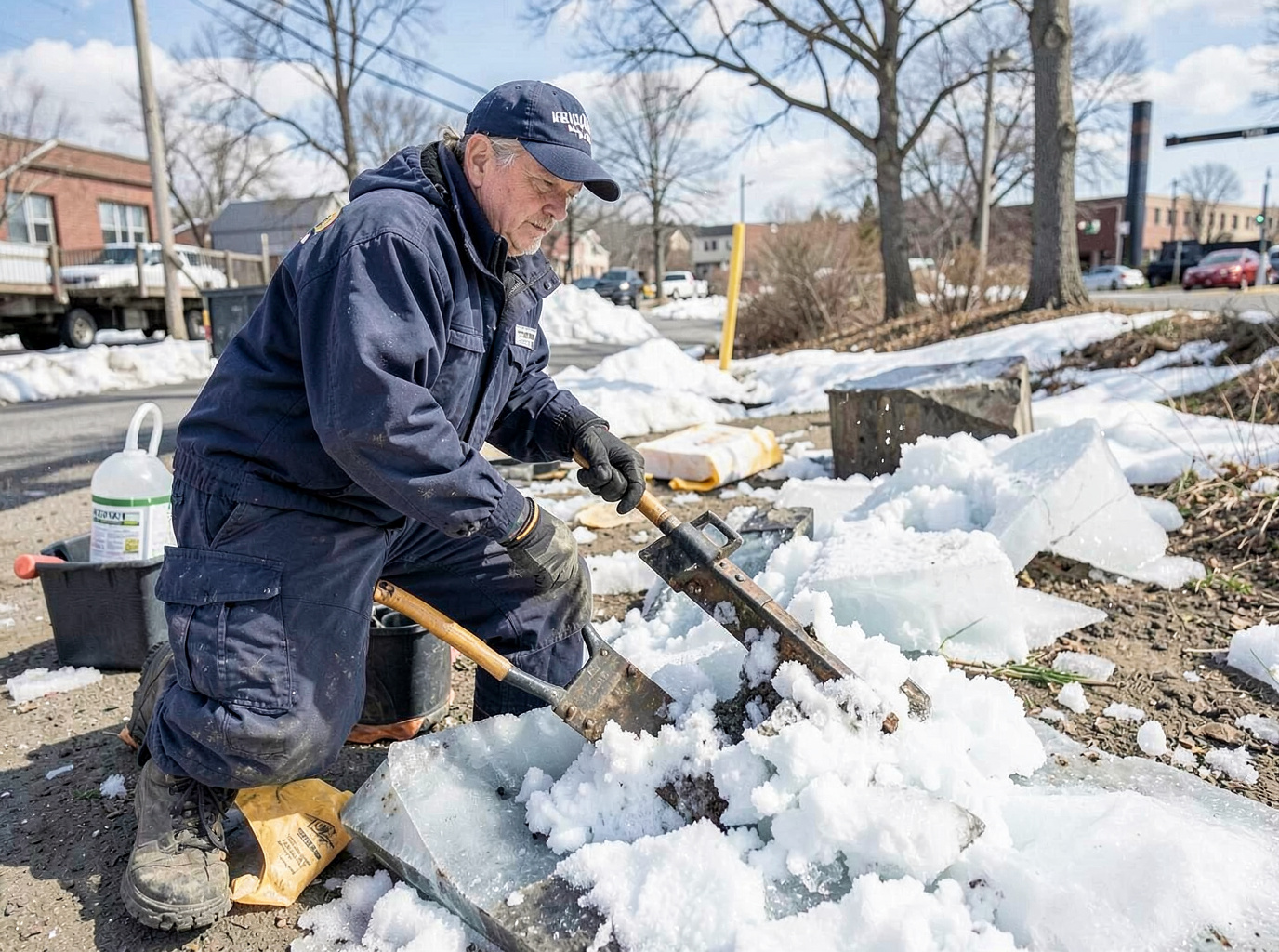
Kenosha winters bring repeated freeze-thaw cycles that push melting snow into ice dams along eaves, especially on the older two-story homes found in Uptown and Lincoln Park. These dams back water under shingles and into attics, and the damage shows up first around Bradford Beach and HarborSide properties where wind off the lake adds extra snow load. Steam removal lets crews clear the ice without tearing asphalt or cedar, while leaving the underlying felt intact.
Many homes built before 1960 in Allendale and Roosevelt lack ridge vents or have blocked soffits, so heat from the living space melts snow unevenly and refreezes at the gutter line. Adding baffles and insulation during the same visit cuts the cycle for the next storm. Crews also check the condition of the Kenosha Streetcar-era homes where narrow lots limit access and require ground-based steam wands instead of roof staging.
Prevention work focuses on the actual leak paths rather than just clearing ice. Heat cable runs are placed only on the lower four feet of roof where dams form most often, and attic inspections note missing baffles or compressed insulation that drives the temperature differential. Homeowners in Downtown Kenosha and Bain Park see the biggest difference after both removal and ventilation corrections are completed in the same trip.
Technician insight
In Kenosha the thing that catches most people out with ice dam removal is the lack of soffit venting on the narrow lots in Allendale and Roosevelt. Older homes there trap heat right at the eaves, so even after we clear the ice the dams return within a week unless we open the airflow. The lake wind makes it worse because it packs snow tighter against the north-facing roofs.
Recurring Dams on a 1920s Uptown Roof
Homeowner called after water stains appeared on second-floor ceilings following a January thaw. We found compacted snow and a solid ice dam along the north eave where soffits were blocked. Steam cleared the ice in one pass and we opened two soffit sections plus added baffles in the attic. No new dams formed during the remaining winter storms.
Ice Dam Removal & Prevention Services We Offer
✓Steam Ice Dam Removal
Low-pressure steam melts dams at the eaves without lifting shingles or forcing water into the roof deck on Kenosha homes.
✓Gutter and Downspout Clearing
Removes packed ice and debris from gutters so meltwater can drain before new dams form along HarborSide and Uptown streets.
✓Roof Edge Heat Cable Installation
Self-regulating cable installed along the first four feet of roof edge prevents refreezing on older homes in Lincoln Park and Allendale.
✓Attic Ventilation Assessment
Checks soffit and ridge vents on Kenosha houses where poor airflow turns every cold snap into repeated ice dam problems.
✓Ice Dam Prevention Inspection
Full roof and attic review that flags missing baffles, compressed insulation, and other issues common in pre-1970 Kenosha housing.
✓Snow Load Reduction
Controlled roof snow removal on steeper pitches near Civic Center Park to reduce the raw material that forms dams.
Ice Dam Removal & Prevention Cost in Kenosha, WI
| Service | Typical Range | What Affects It |
|---|---|---|
| Steam ice dam removal, single-story home | $250–$450 | Price rises with multiple roof planes or second-story access |
| Gutter and downspout ice clearing | $150–$300 | Added when downspouts are frozen solid |
| Heat cable installation, per linear foot | $8–$14 | Includes controller and clips; most Kenosha jobs run 30–60 feet |
| Attic ventilation and insulation review | $125–$225 | Often bundled with removal to prevent repeat calls |
Ranges are typical for Kenosha, WI and confirmed with an exact written quote before any work starts.
How it works
- 1
Site Evaluation
Crew walks the roof and attic to locate active dams and note ventilation gaps typical in Kenosha's older neighborhoods.
- 2
Steam Removal
Low-pressure steam clears ice at the eaves while protecting shingles on homes in Uptown and Roosevelt.
- 3
Immediate Drainage Check
Gutters and downspouts are cleared so water flows away from the foundation before the next freeze.
- 4
Prevention Recommendations
Written notes cover heat cable placement, insulation fixes, and ventilation upgrades that address the local climate pattern.
Pricing
Pricing depends on roof pitch, number of stories, and how many eaves are affected; quotes are given on site after inspection.